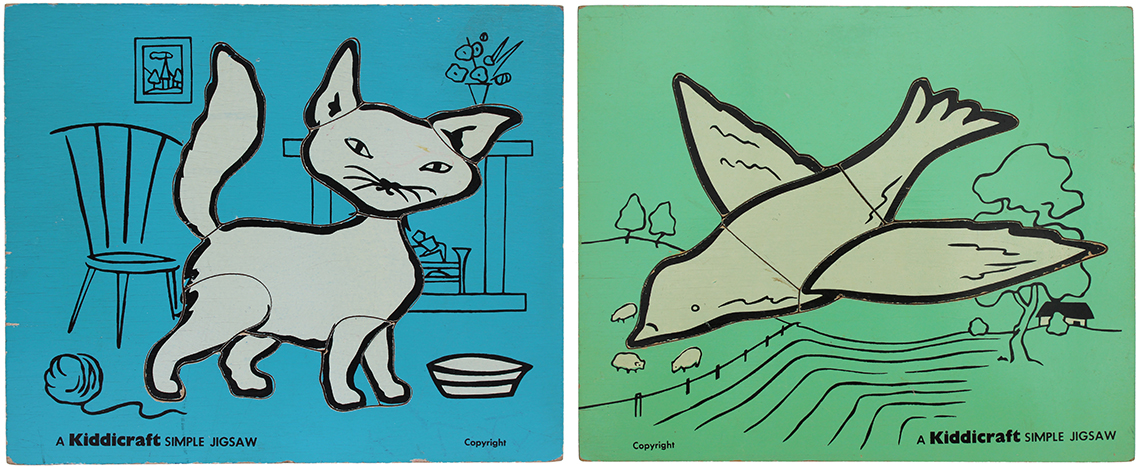
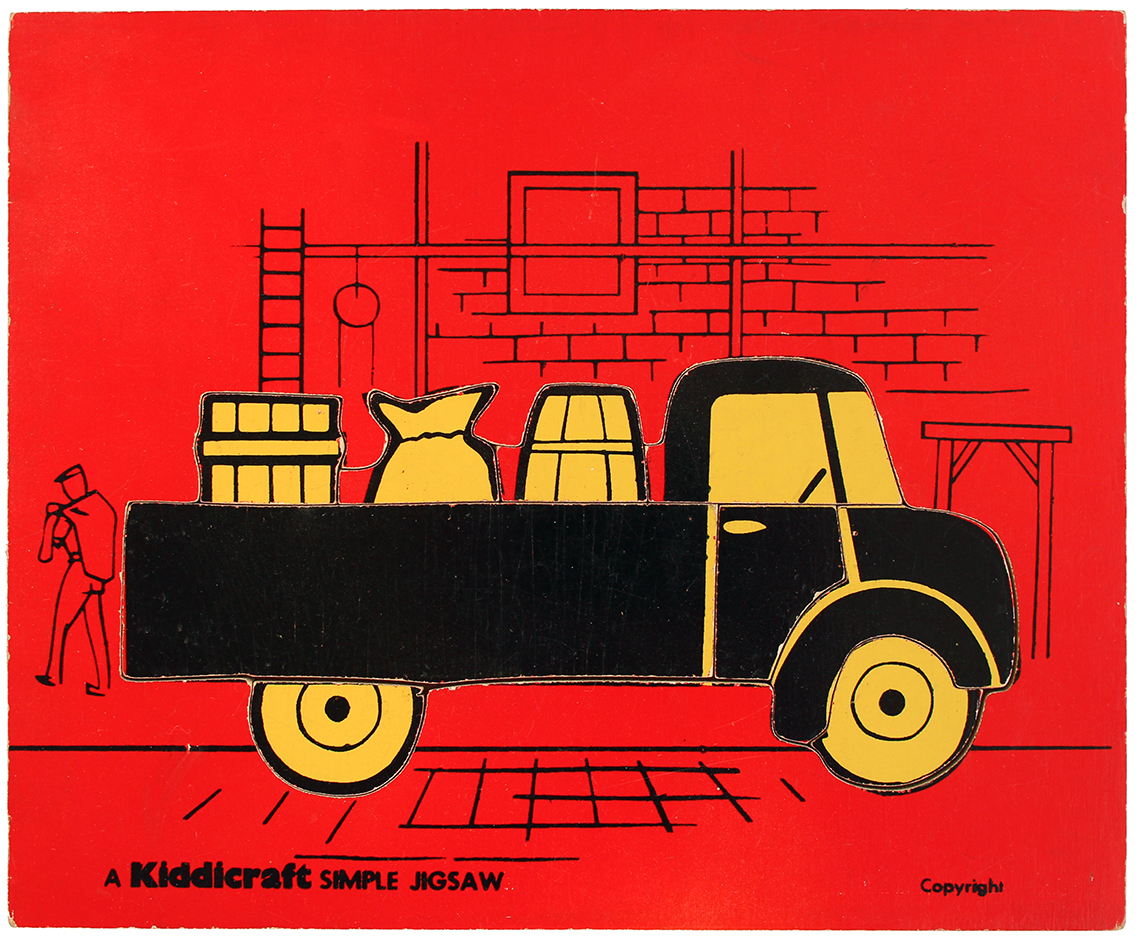
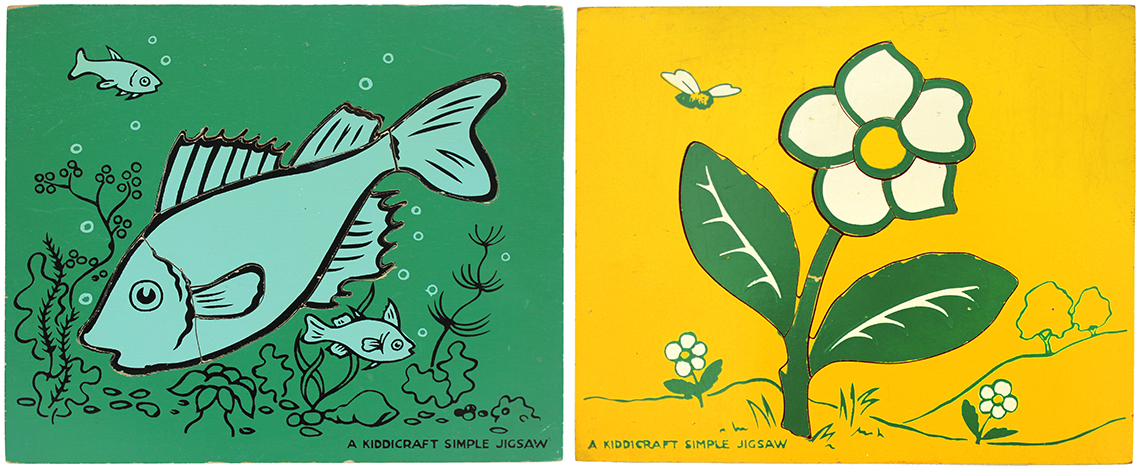
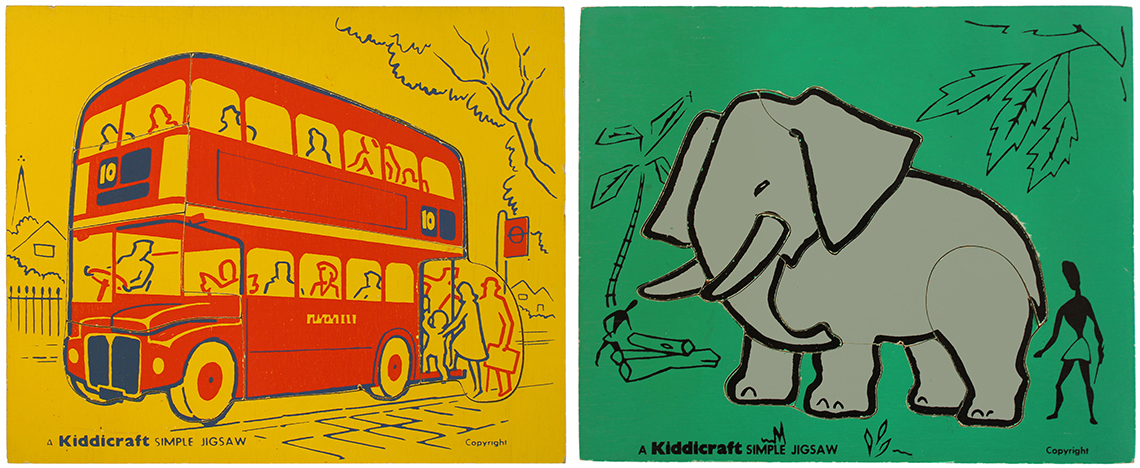
Kiddicraft
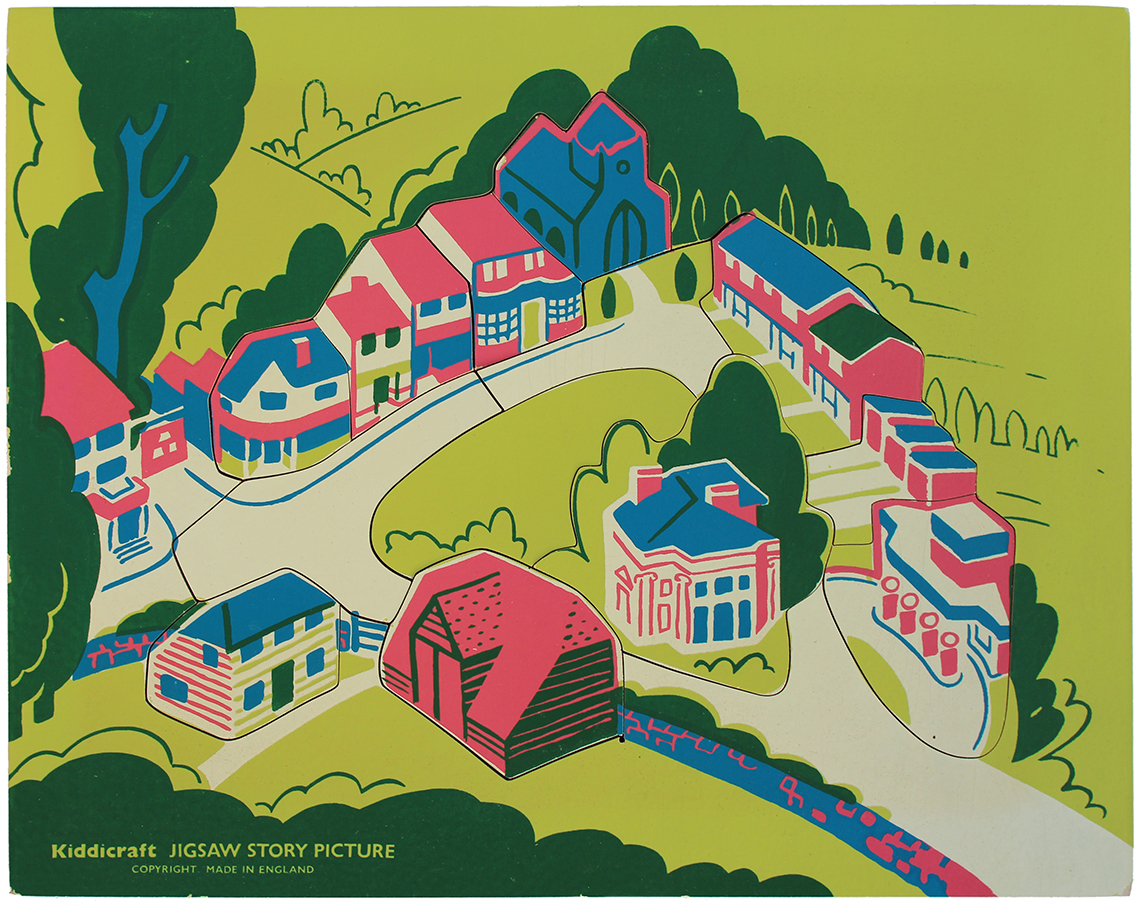
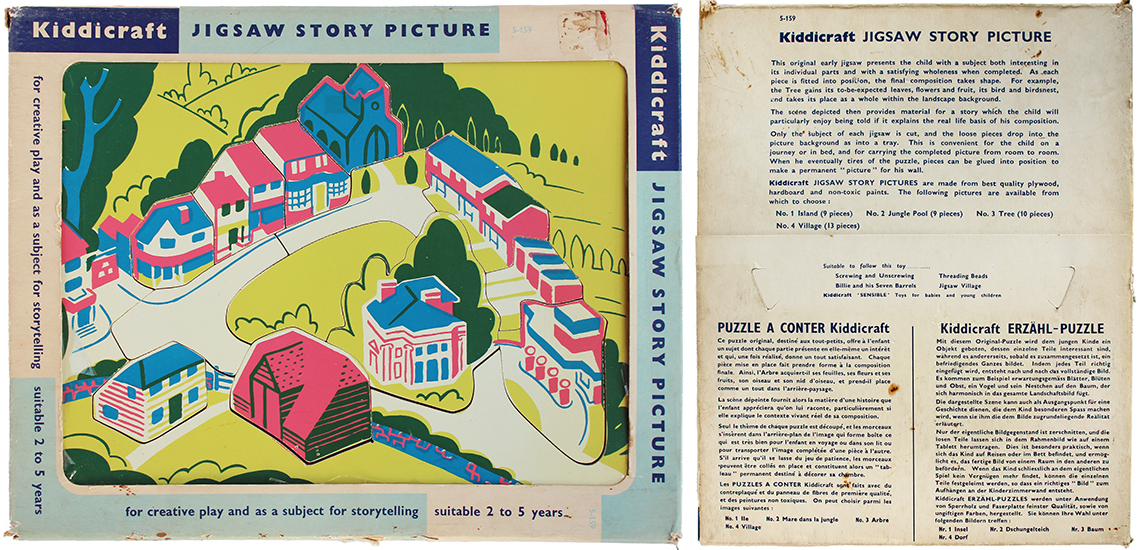
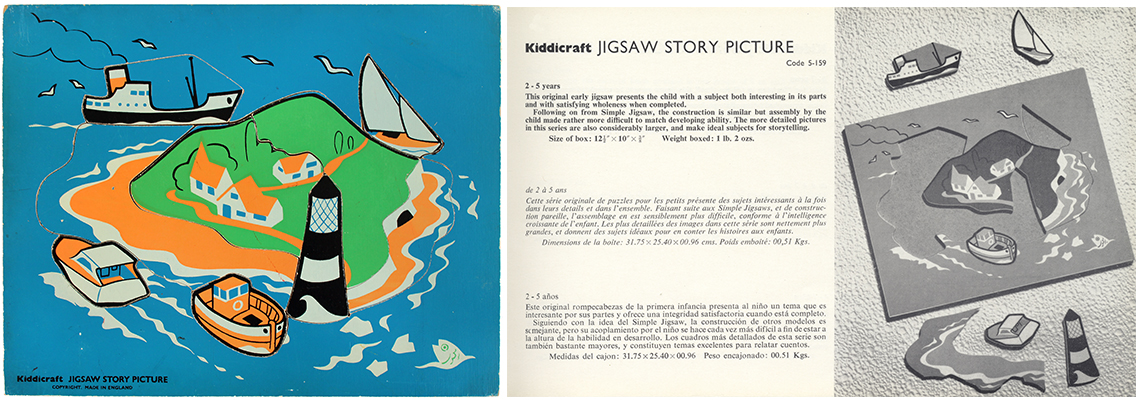
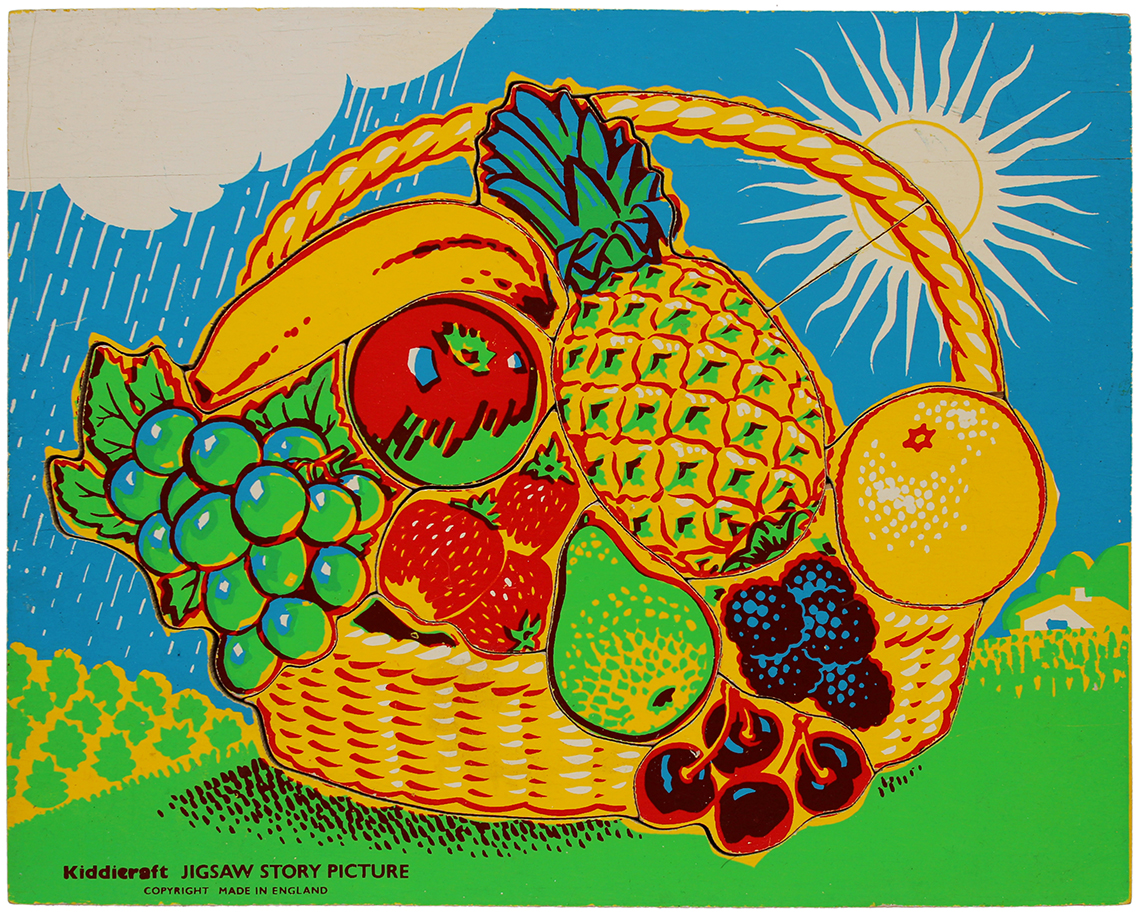
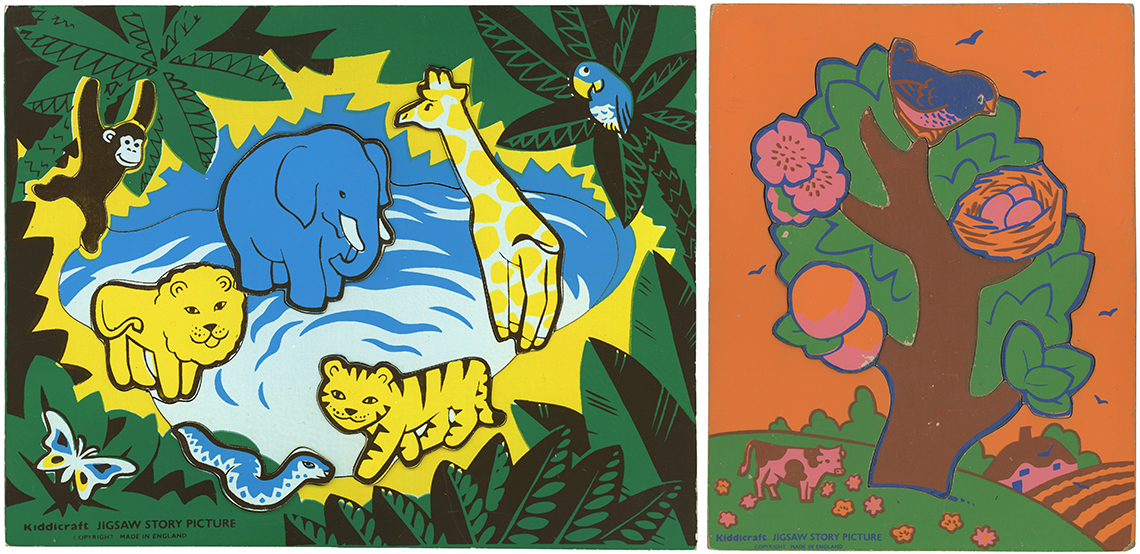
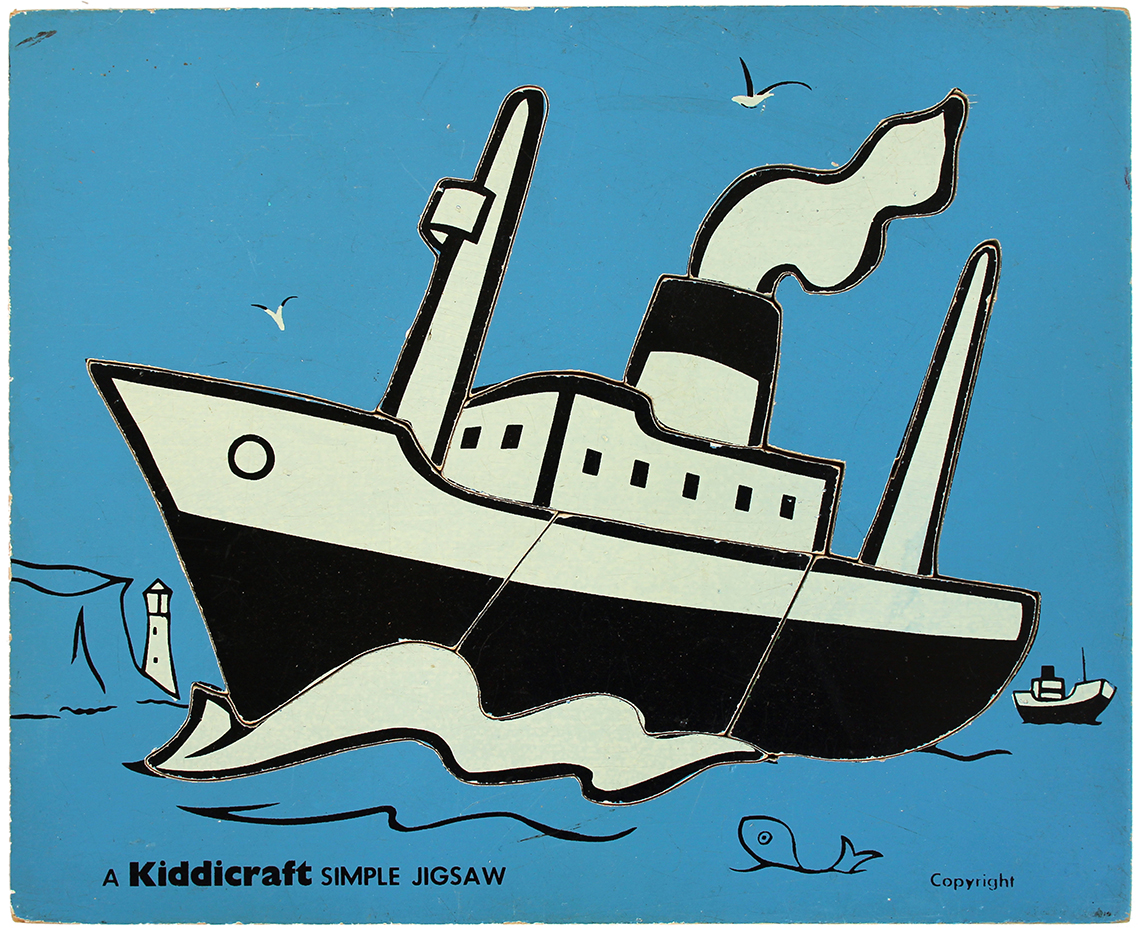
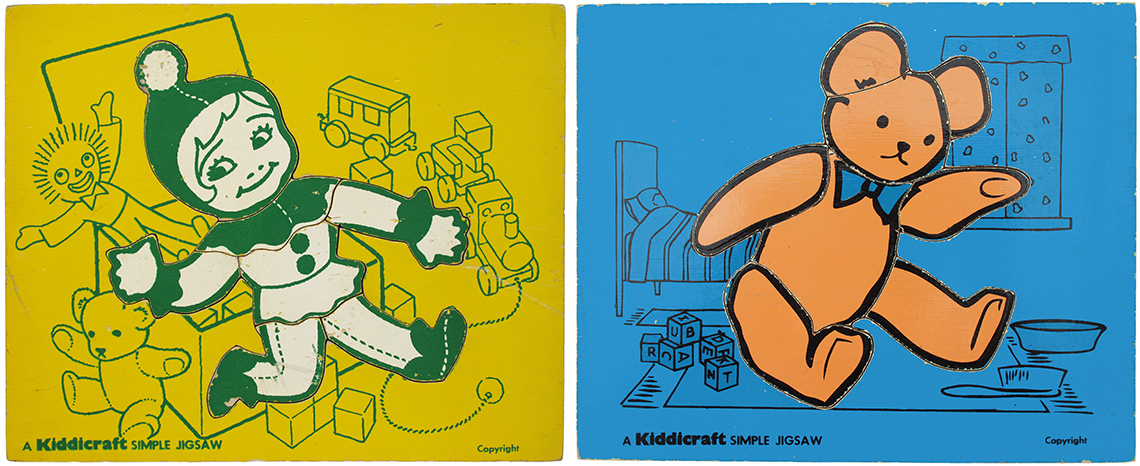
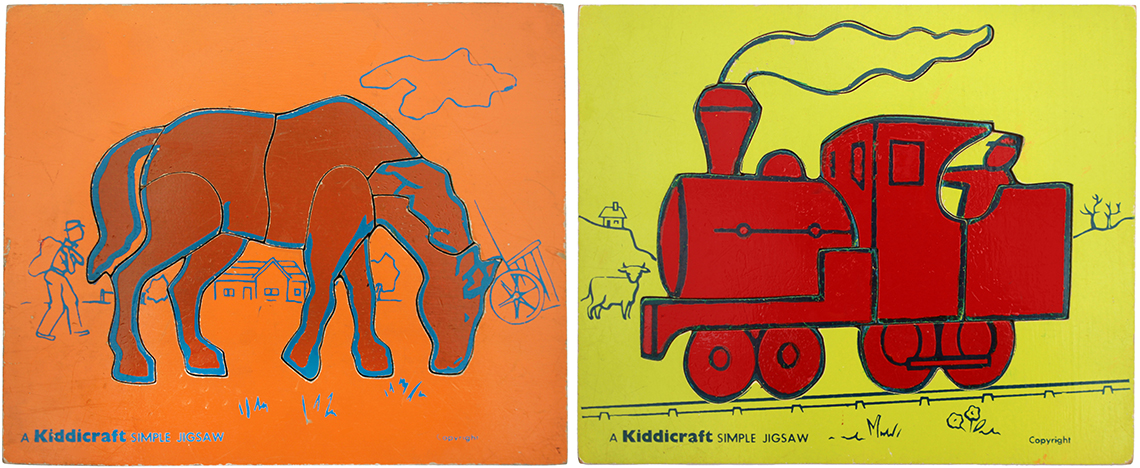
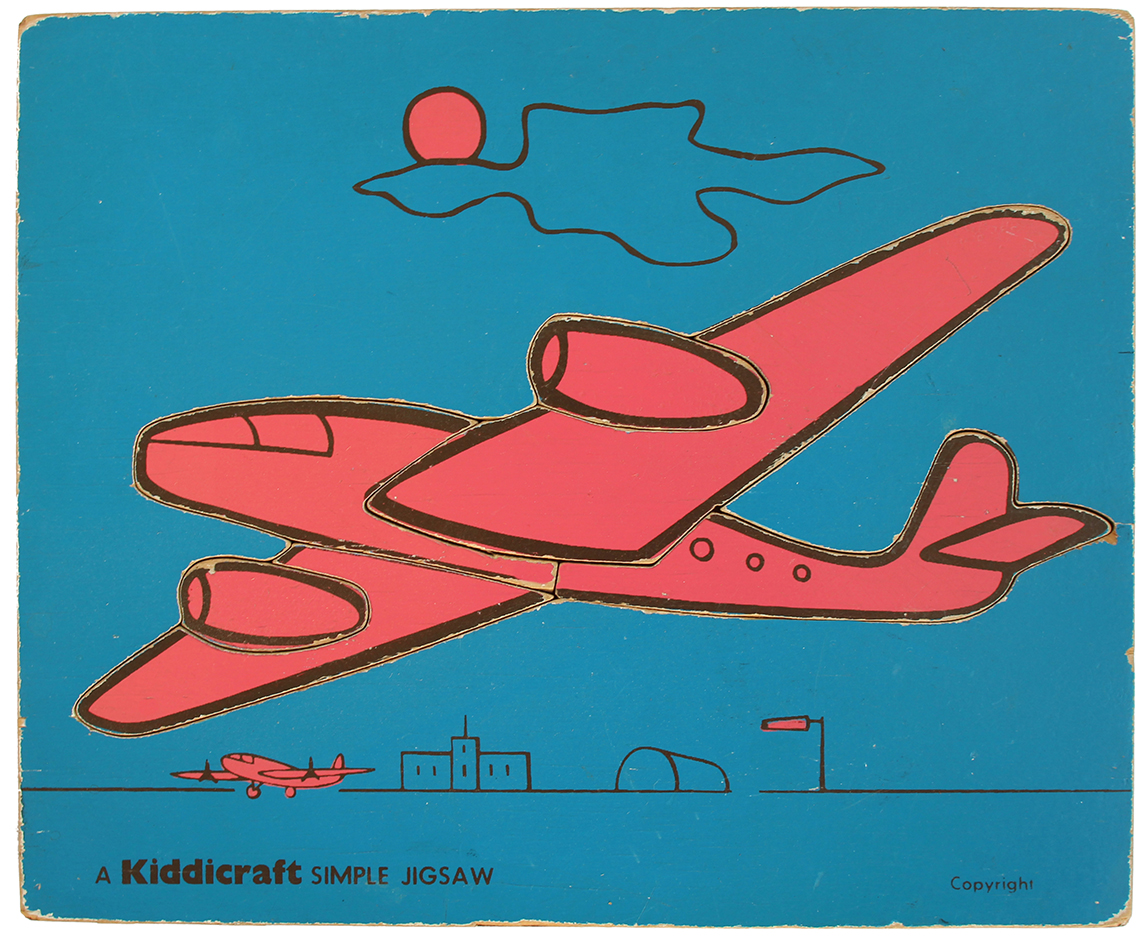
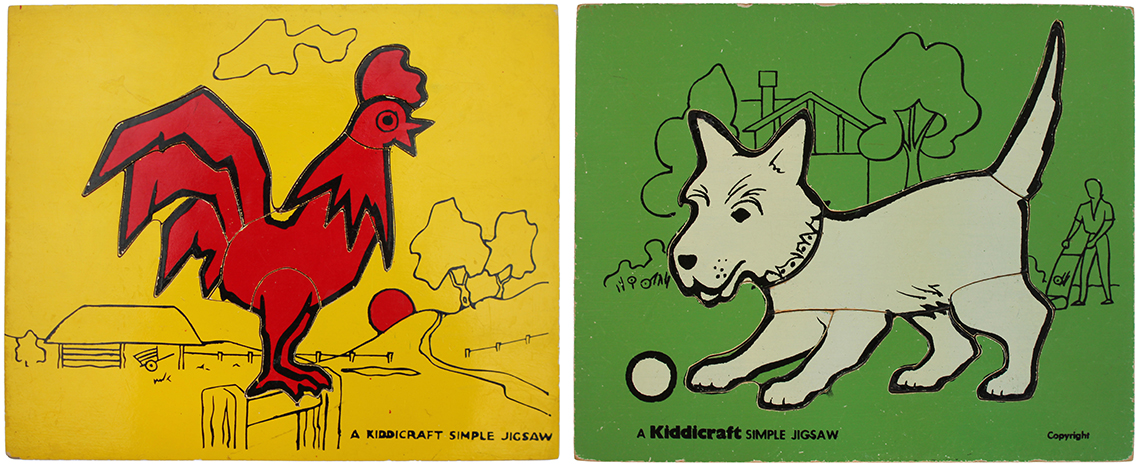
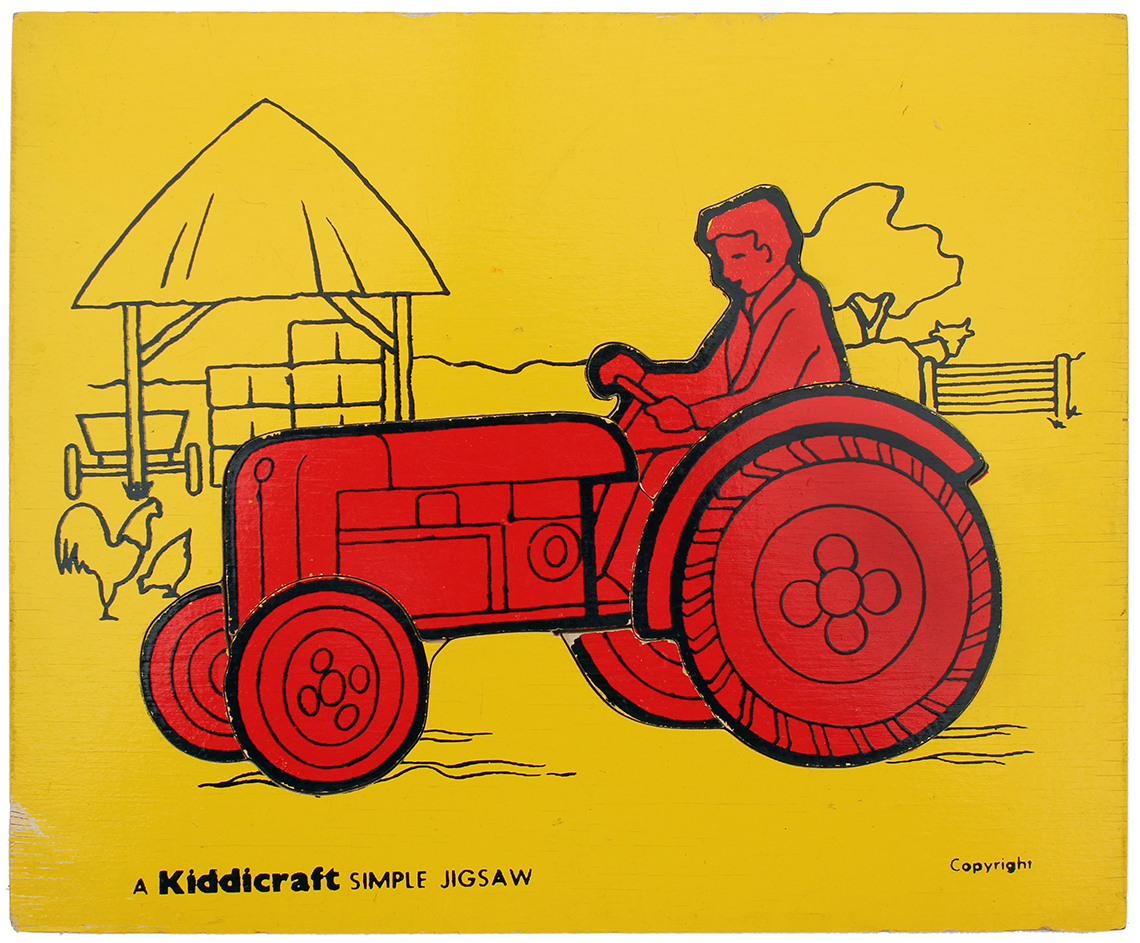
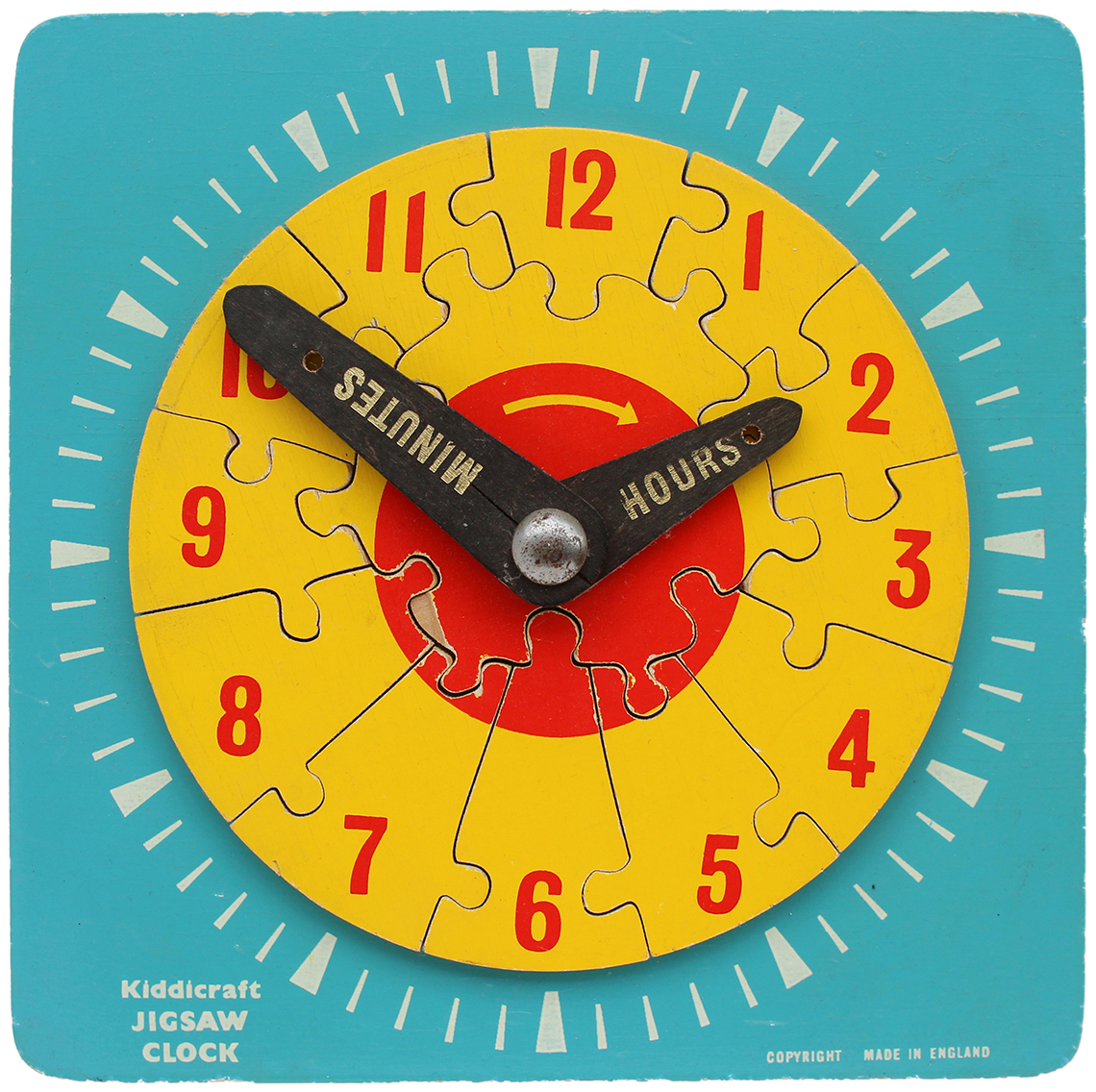
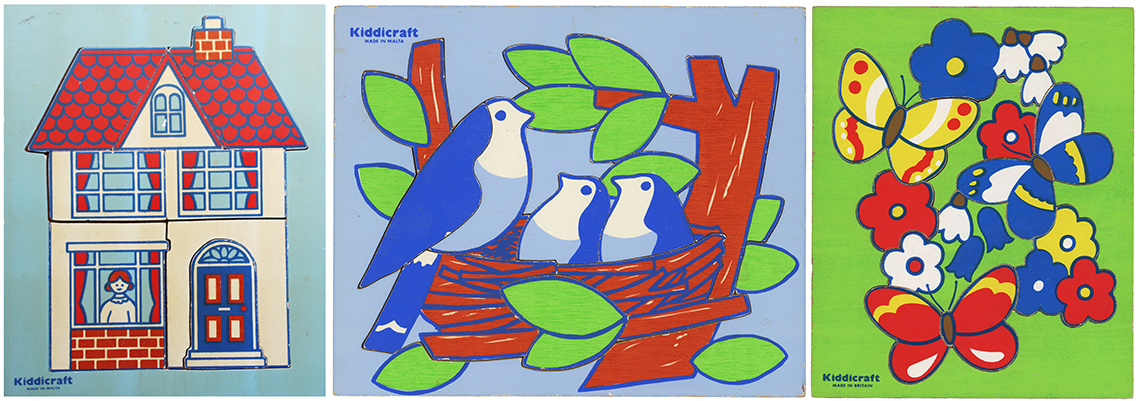
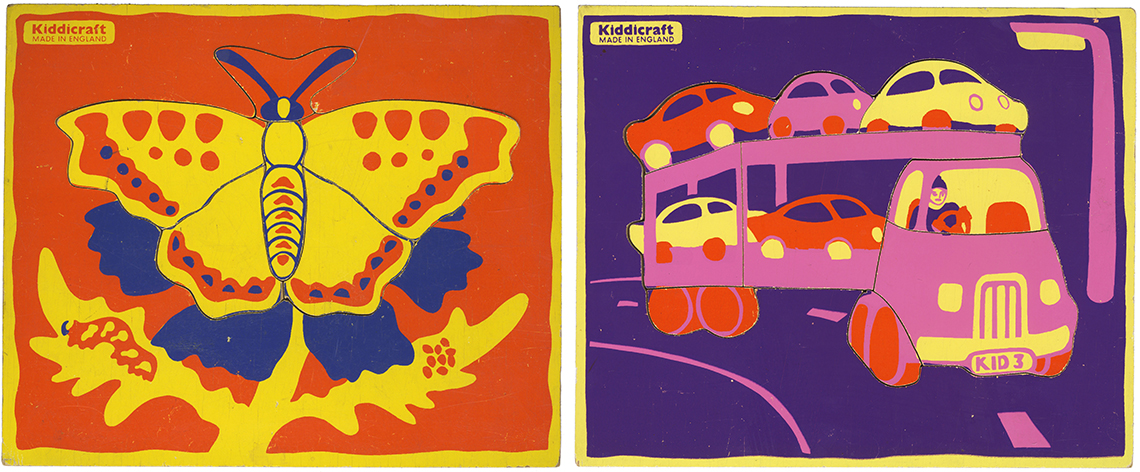
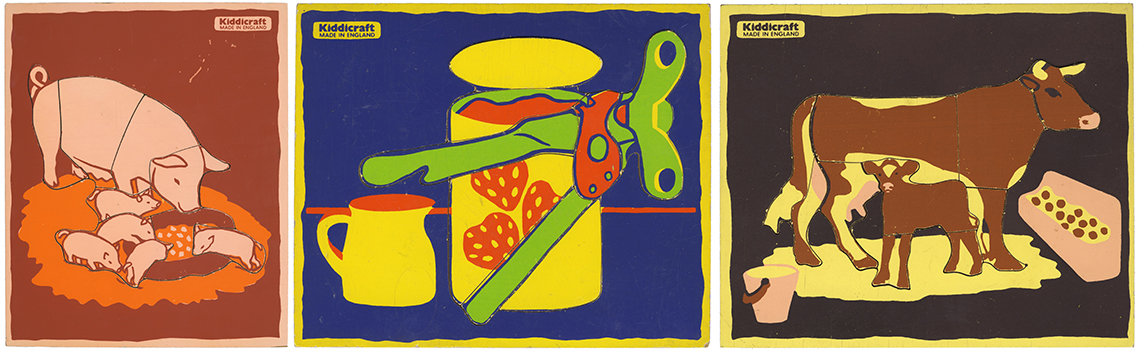
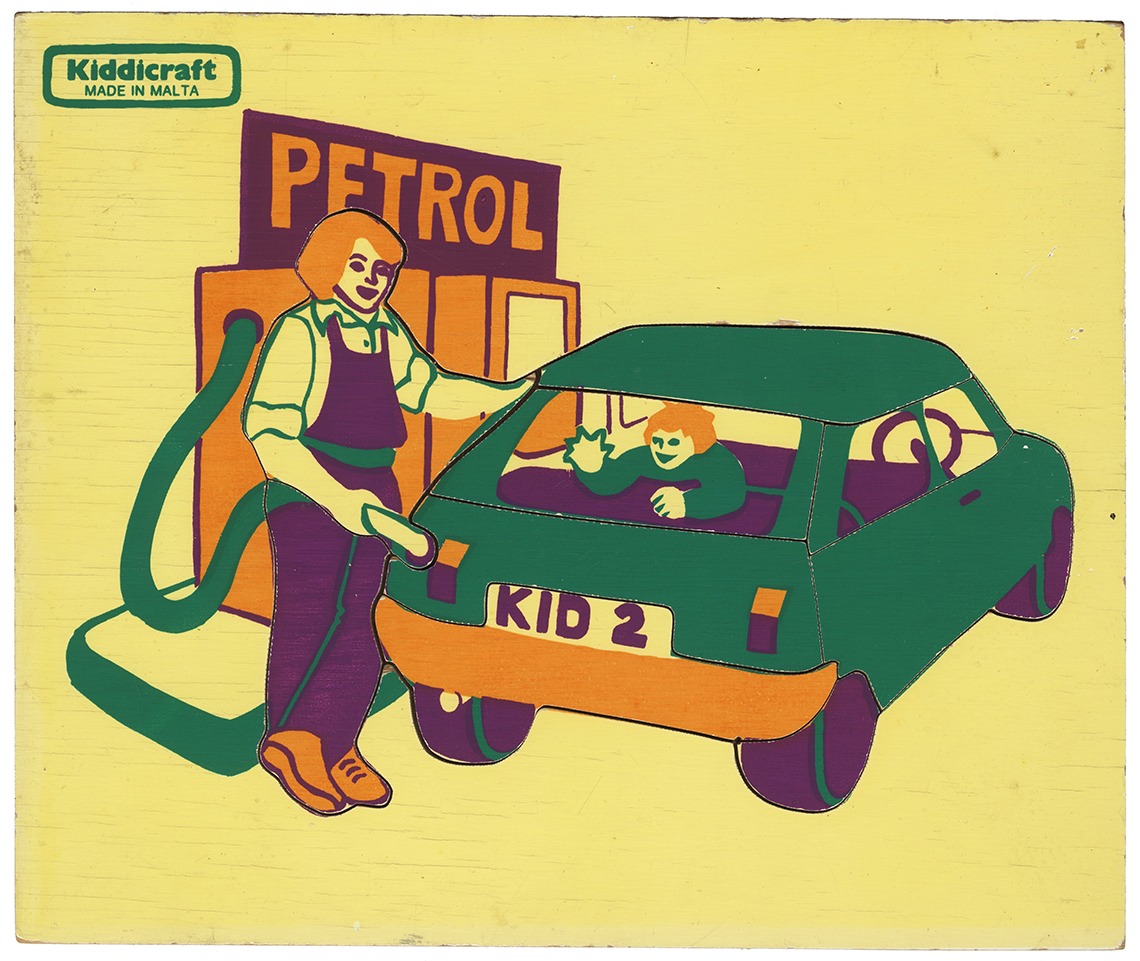
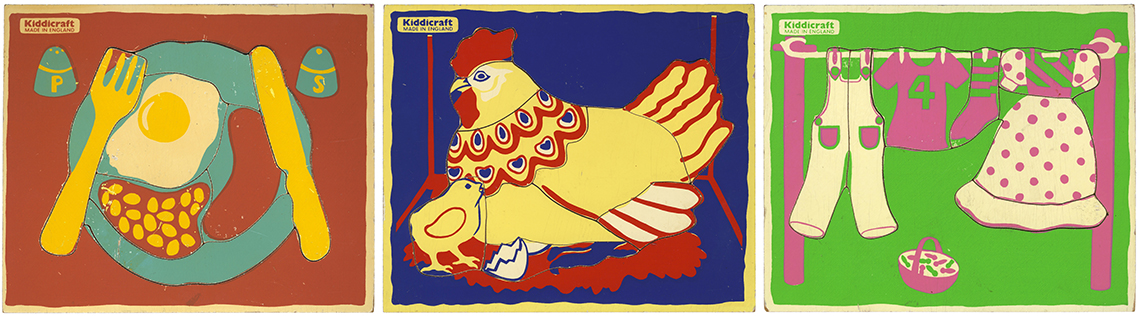
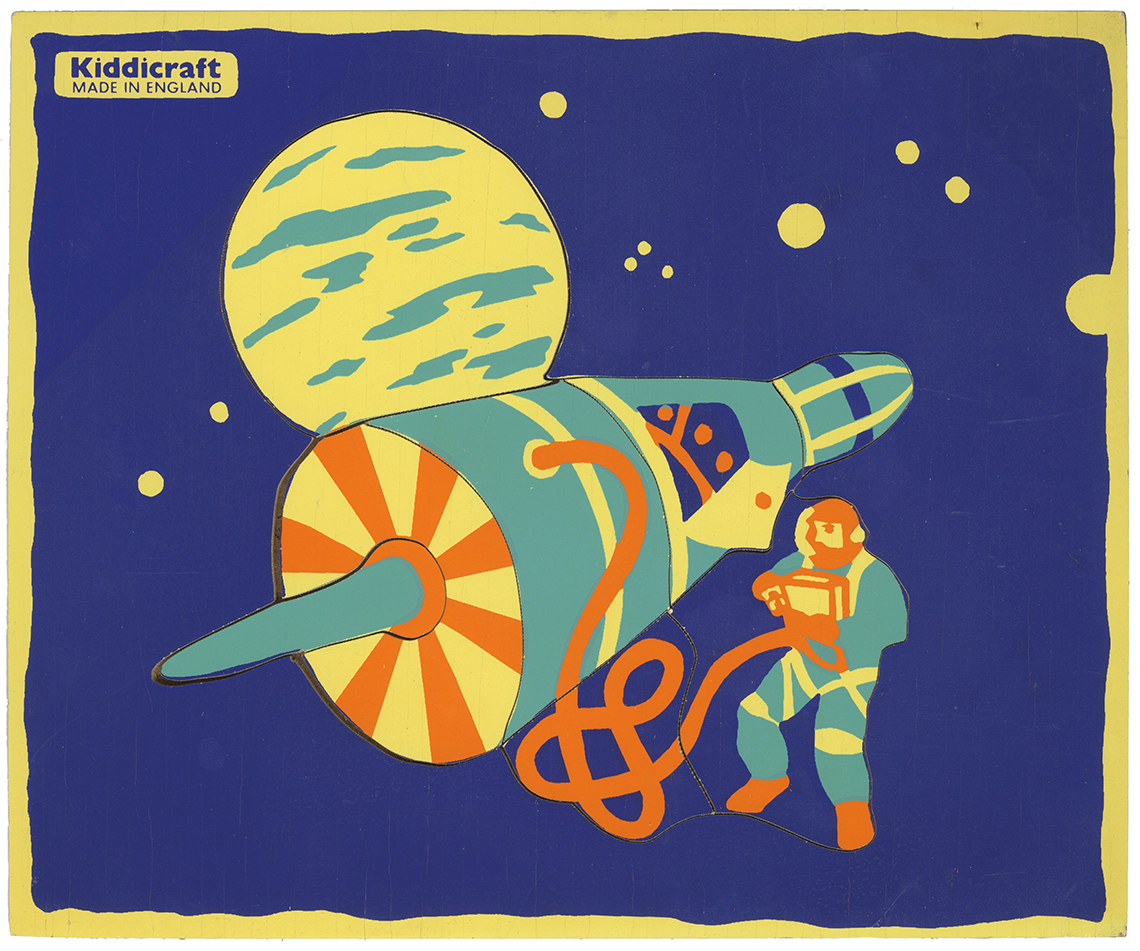
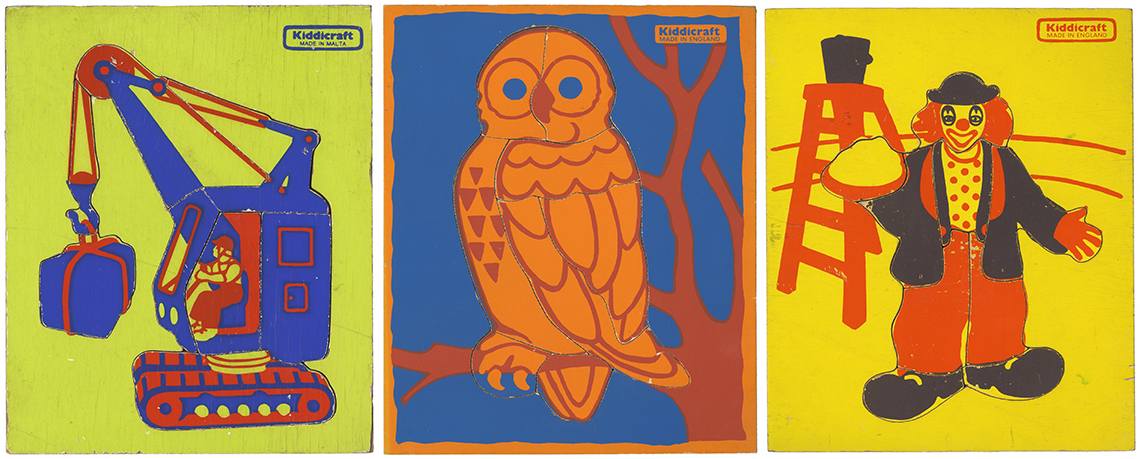
Kiddicraft was a UK company formed by Hilary Page in 1932. It was Page who steered the toy market away from wooden toys towards plastic toys in the late 30’s and is attributed to having designed ‘self-locking building bricks’ which inspired a version of this – automatic binding bricks – which we all know as Lego. Sadly Hilary Page took his own life due to business worries in 1957, however Kiddicraft continued to operate until it was sold to Fisher-Price in 1989 who dropped the Kiddicraft branding in the mid 1990’s. It was during the 60’s and 70’s that Kiddicraft produced the range of puzzles that are seen within this section, with a strong suggestion that the puzzles not only present the child with a suitable challenge for their age category, but that the adult should offer up a story to supplement the play value of the toy. The puzzles themselves are charming, and were widely available in an array of various colourways, and whilst the earlier 1960’s designs are unattributed, Sue Grant was identified as the designer in the later series. In terms of collecting, the Simple Jigsaw sets from the 1960’s are fairly easy to collect, but the later series includes some puzzles which rarely turn up and one which has proved to be elusive despite a number of avid collectors watching out for it’s appearance; this puzzle ‘Brush your Teeth’ designed by Sue Grant is believed to be particularly scarce due to children actually using the toothbrush in the puzzle and chewing it, thus resulting in most versions being disposed of. Indeed, such is the scarcity of this puzzle, it has not been possible to include a image of it.
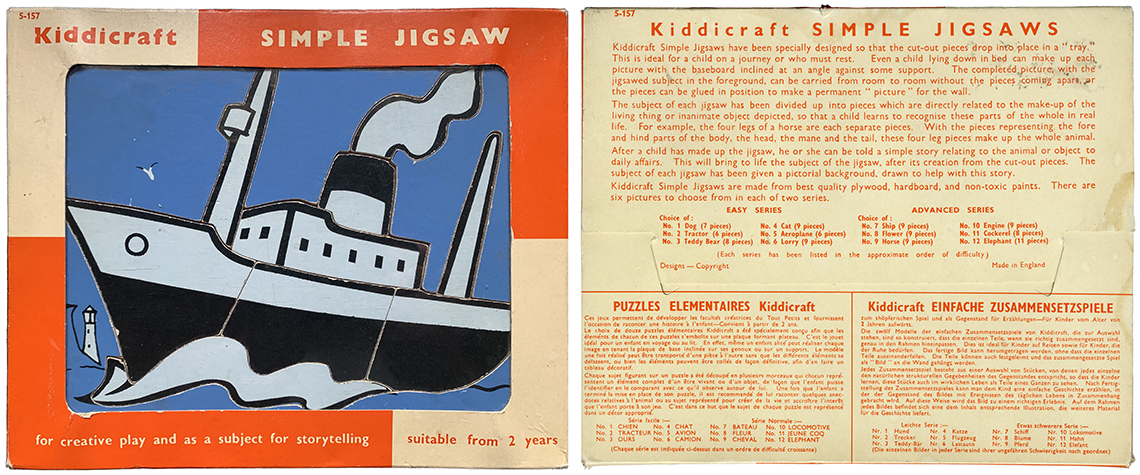
‘Kiddicraft Simple Jigsaws have been specially designed so that the cut-out pieces drop into place in a ‘tray.’ This is ideal for a child on a journey or who must rest. Even a child lying down in bed can make up each picture with the baseboard inclined at an angle against some support. The completed picture, with the jigsawed subject in the foreground, can be carried from room to room without the pieces coming apart, or the pieces can be glued in position to make a permanent ‘picture’ for the wall.
The subject of each jigsaw has been divided up into pieces which are directly related to the make-up of the living thing or inanimate object depicted, so that a child learns to recognise these parts of the whole in real life. For example the four legs of a horse are each separate pieces. With the pieces representing the fore and hind parts of the body, the mane and the tail, these four leg pieces make up the whole animal.
After a child has made up the jigsaw, he or she can be told a simple story relating to the animal or object to daily affairs. This will bring to life the subject of the jigsaw, after its creation from the cut-out pieces. The subject of each jigsaw has been given a pictorial background, drawn to help with this story.’